
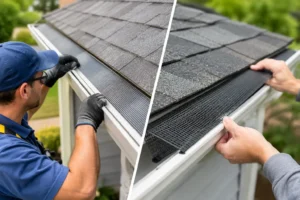
A gutter guard can look like a simple weekend upgrade until the first tropical downpour sends water over the gutter edge and against the fascia. For homeowners comparing professional versus DIY gutter guards, the real question is not simply who installs the guard. It is whether the finished system can manage the rain, pine needles, roof grit, humidity, and wind-driven debris common across the Grand Strand and coastal Carolinas.
The right answer depends on your roofline, gutter condition, debris exposure, and comfort with ladder work. A well-chosen DIY product can be suitable for a straightforward, low-risk home. Yet many properties benefit from a professional inspection and installation because gutter protection only works as well as the gutter system beneath it.
Professional Versus DIY Gutter Guards: The Core Difference
DIY gutter guards are sold as a product. Professional gutter protection is a system assessment followed by a product installation designed around the home.
That distinction matters. Before a guard is added, the installer should confirm that gutters are correctly pitched, securely fastened, properly sized, and free of leaks at end caps, corners, and seams. Downspouts must have a clear path for water to leave the roofline. If the gutters are already pulling away from the fascia or holding standing water, covering them with guards does not solve the drainage problem.
A homeowner installing guards may spot obvious debris and clean the gutters first. A trained specialist is more likely to identify issues that are easy to miss from a ladder, such as a poorly supported run, a low section that collects sediment, a damaged outlet, or a roof valley that dumps an exceptional volume of water into one area.
Where DIY Gutter Guards Can Make Sense
DIY guards are not automatically a poor choice. They can be a reasonable option for a single-story home with easy ladder access, gutters in good repair, and modest leaf exposure. Homeowners who are comfortable measuring, cutting material, working safely at height, and checking their work after rain may appreciate the lower upfront cost.
The product type matters considerably. Brush and foam inserts are usually easy to place, but they sit inside the gutter and can hold fine debris or encourage organic buildup in a humid climate. Plastic screens are widely available and inexpensive, though they may become brittle under prolonged sun exposure or shift during strong winds. Some snap-in screens also leave gaps where small debris can enter.
DIY micro-mesh products can provide finer filtration, but the installation is more demanding than it first appears. The mesh must be secured without creating openings, interfering with shingles, or changing the roof-to-gutter water path. A guard that is slightly loose, uneven, or incorrectly positioned can allow debris to collect underneath it, where cleanup becomes more difficult.
The savings are most meaningful when the installation stays simple. Once a project involves a steep roof, a second story, long runs of gutter, tight landscaping, heavy pine needle exposure, or needed repairs, the risk and added effort can narrow the gap between DIY and professional service.
Why Coastal Rain Changes the Decision
Myrtle Beach, North Myrtle Beach, Surfside Beach, Murrells Inlet, Pawleys Island, Conway, and Georgetown homeowners contend with more than a few autumn leaves. Coastal storms can bring intense rain in a short period, while pine trees, pollen, seed pods, roof grit, and windblown debris create year-round maintenance pressure.
During a hard downpour, a gutter guard needs to shed debris while allowing a large volume of water to enter the gutter. If water races over the guard and misses the gutter, it can erode landscaping, stain siding, soak entry areas, and contribute to moisture problems around the foundation or crawl space. Over time, persistent overflow can damage fascia boards and create conditions for mold, mildew, and wood rot.
This is where premium stainless-steel micro-mesh has a practical advantage over larger-opening screens. Fine mesh is designed to keep out small debris such as pine needles and roof grit while allowing water through. GutterGlove systems also use anti-microbial technology to help reduce organic buildup on the guard surface. No gutter protection product eliminates every bit of maintenance in every setting, but the right system can greatly reduce the frequency and difficulty of gutter cleaning.
The Installation Details That Affect Performance
A gutter guard installation has several details that determine whether it protects the home or creates another maintenance issue. Water flow, attachment method, guard angle, gutter condition, and roof configuration all deserve attention.
Roof valleys and heavy-flow areas
A roof valley concentrates water into a narrow channel. On a home with multiple valleys, conventional guards may struggle at these high-flow points if they are not selected and fitted correctly. A professional can evaluate whether the gutter itself needs additional capacity, reinforcement, or a different guard approach in that location.
Shingles, metal roofing, and roof warranties
Guard attachment must work with the roof material and edge details. Improperly forcing a guard under shingles or fastening it in the wrong location can affect water flow and may create concerns around roof warranties. The installer should use a method appropriate for the roof rather than treating every roofline the same.
Hidden gutter repairs
Guards should not conceal trouble. Loose hangers, leaking corners, missing end caps, and sagging sections should be repaired before a permanent guard system is installed. Addressing these items first helps water move toward the downspouts instead of finding weak points along the gutter line.
Safe access
Ladder falls are a serious consideration, especially when the work involves wet roofs, uneven ground, two-story elevations, or structures near porches and decks. Professional crews have the equipment and experience to work around these conditions while completing the job efficiently. For many homeowners, particularly second-home and vacation-property owners, avoiding repeated trips up a ladder is part of the value.
Comparing Cost Beyond the Initial Purchase
DIY guards generally cost less at checkout because the homeowner supplies the labor. That calculation should include the tools, safety equipment, disposal of old material, cleaning time, and the possibility of replacing guards that do not perform well. It should also account for repairs that may remain unnoticed until water damage appears.
Professional installation carries a higher initial price because it includes expertise, labor, system evaluation, and often repair work needed to prepare the gutters. With Clearwater Rain Gutters, homeowners can request a free inspection and estimate to understand the condition of their existing gutter system before deciding on the appropriate solution.
Long-term value is often tied to durability and warranty coverage. Professionally installed GutterGlove stainless-steel micro-mesh is backed by a 40-year manufacturer no-clog warranty. That level of coverage does not mean a home will never need attention after a major storm, but it provides meaningful assurance that the guard system is built for sustained performance rather than a short-term fix.
When Professional Installation Is the Better Fit
Professional installation is usually the more dependable choice when a home has steep or complex rooflines, two or more stories, heavy pine needle accumulation, frequent storm exposure, or gutters that have not been inspected recently. It is also a strong option for homeowners who want a lasting system without taking on ladder work and recurring trial-and-error maintenance.
It can be especially valuable for properties that sit vacant part of the year. A clogged gutter at a vacation home may go unnoticed through several storms, allowing water to overflow against the home before anyone arrives. A properly evaluated and professionally installed protection system reduces one of the most common drainage vulnerabilities.
That does not make DIY the wrong answer for every house. If your gutters are accessible, structurally sound, and exposed to light debris, a carefully installed DIY guard may serve you well. The key is to avoid choosing based on price alone. A guard is only a good investment when it keeps water moving where it belongs.
Before purchasing any system, look at your home after a hard rain. Note where water overshoots, where mulch washes out, and where gutters hold debris or sag. Those observations, combined with a professional inspection when conditions are more complex, can point you toward protection that preserves your roofline, foundation, and peace of mind for years to come.
Leave a Reply
You must be logged in to post a comment.