
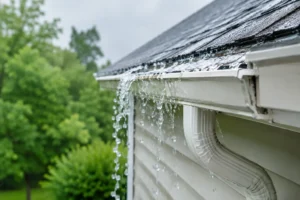
A gutter that spills over during a hard rain is not just an annoyance. Water can run behind the fascia, wash mulch and soil away from the foundation, stain siding, and create damp conditions around crawl spaces. Along the Grand Strand, where tropical downpours, humidity, pine needles, and wind-driven debris are regular concerns, homeowners need to know how to stop gutter overflow before a small drainage problem becomes costly property damage.
The right fix depends on why water is leaving the gutter. A clog is common, but it is not the only cause. Gutters that are undersized, incorrectly pitched, damaged, or overwhelmed by roof runoff can all overflow even when they look relatively clean from the ground.
How to Stop Gutter Overflow at the Source
Start by observing where and when the overflow occurs. If water pours over the front edge at one spot, debris may be blocking the channel or downspout. If it spills across a long section during every heavy shower, the issue may be gutter capacity, poor slope, or water shooting off the roof too quickly.
Avoid treating every overflow as a cleaning issue. Cleaning may restore flow temporarily, but it will not correct loose hangers, a crushed downspout, an improperly placed outlet, or a roof valley that sends a concentrated stream of water into one short gutter run.
Remove debris from gutters and downspouts
Leaves, pine straw, roof grit, seed pods, and nesting material can create a dam inside the gutter. Water backs up behind it until it spills over the outer edge or against the home. Downspout clogs are especially disruptive because a gutter may appear clear while the water has nowhere to go.
If you clean the system yourself, use a stable ladder, wear gloves and eye protection, and work only in dry, safe conditions. Flush the gutter after removing debris to see whether water reaches the downspout and exits freely. A garden hose can reveal slow drainage, hidden clogs, and joints that leak under pressure.
For many homeowners, particularly second-home owners or anyone uncomfortable on a ladder, professional cleaning is the safer choice. It also gives a trained technician the opportunity to identify damage that is easy to miss from the ground.
Check gutter slope and secure loose sections
Gutters need a gradual pitch toward the downspout. If a section is level or sagging, standing water and debris collect there. During a storm, the backed-up water can overflow well before it reaches the outlet.
Look for visible low spots, water remaining in the gutter after rain, or a gutter pulling away from the fascia. These signs usually point to worn hangers, loose fasteners, improper installation, or fascia damage. Re-securing and re-pitching the gutter can restore proper drainage, but the work should be done carefully. Forcing fasteners into rotted wood only hides the underlying problem and can lead to a larger failure later.
Make sure downspouts can handle the runoff
A downspout must be open, correctly connected, and positioned to carry water away from the house. If water erupts from the top of a downspout during rain, the blockage may be in an elbow or at the bottom extension. If it exits but pools near the foundation, the discharge path needs attention as well.
Downspout extensions should direct water away from the home without creating a trip hazard or sending runoff toward a neighbor’s property. On coastal lots with flat terrain or frequent saturated soil, drainage planning may require more than simply adding a short extension. The goal is to move water away from the foundation and prevent recurring erosion near landscaping and walkways.
When Cleaning Will Not Stop Gutter Overflow
A clean gutter can still overflow if the system is too small for the roof or poorly matched to the home’s drainage pattern. This is common near roof valleys, dormers, and steep roof sections, where large volumes of water can arrive at one point in seconds.
Address roof valleys and high-volume areas
Roof valleys concentrate runoff. During a Carolina thunderstorm, they can send enough water into a conventional gutter to make it overshoot the channel. Splash guards, wider gutters, larger downspouts, or an additional downspout may help, depending on the roof layout and the location of the overflow.
There is no universal upgrade that fits every home. A larger gutter may be appropriate for a broad roof plane, while a targeted solution at a valley may be more effective and less invasive. A professional inspection should account for roof pitch, roof area, outlet placement, local tree cover, and the amount of water a specific section must manage.
Repair leaks, seams, end caps, and corners
Overflow is obvious during rain, but leaking joints can cause similar damage more quietly. Water escaping through a failed seam, corner, or end cap can soak fascia boards, create stains, and erode soil below. In humid coastal areas, repeated moisture exposure can contribute to mold, mildew, and wood rot.
Inspect for drip lines beneath corners and seams after a storm. Small sealant repairs may be sufficient when the gutter is otherwise sound. If the metal is warped, heavily corroded, or repeatedly separating, replacement of the affected component may be the more durable option.
Prevent Future Clogs With Professional Gutter Protection
Cleaning restores a clogged gutter, but it does not change the conditions that caused the clog. Homes in Myrtle Beach, North Myrtle Beach, Surfside Beach, Murrells Inlet, Pawleys Island, Conway, and Georgetown often contend with pine needles, oak leaves, roof grit, insects, and storm-blown debris throughout the year. Repeated ladder cleaning is inconvenient, and it carries real fall risk.
Professionally installed stainless-steel micro-mesh gutter protection keeps debris out of the gutter while allowing rainwater to enter. Unlike bulky screens with large openings, fine micro-mesh is designed to manage small debris such as pine needles and roof granules that can otherwise settle in the gutter and form a blockage. The gutter still needs to be properly pitched, securely fastened, and sized for the roof, but protection helps preserve the flow capacity it was designed to provide.
Premium systems such as GutterGlove use stainless-steel micro-mesh and anti-microbial technology to support long-term performance in wet, debris-heavy conditions. Installation details matter. The guard must be fitted to the roof edge and gutter configuration so water is directed into the system rather than skipping over it during heavy rain. An experienced installer will also evaluate whether existing repairs or capacity improvements should be completed before the guard is installed.
Clearwater Rain Gutters has served homeowners since 2006 with inspections that examine the whole drainage system, not just the visible debris on top. That includes gutter alignment, outlet performance, damaged corners and end caps, fascia condition, roof runoff patterns, and the debris pressure around the property.
Know When to Schedule an Inspection
You do not need to wait for a dramatic waterfall over the gutter to seek help. Schedule an inspection if you see recurring overflow, overflowing at the same corner, peeling paint on fascia, gutters pulling away from the roofline, soil channels near the foundation, or damp areas in a crawl space after storms.
An inspection is especially worthwhile before hurricane season, after a major storm, or when purchasing a coastal home that may have deferred maintenance. The most effective solution may be a simple cleaning and repair, a downspout improvement, or a customized gutter-protection installation. A clear recommendation should explain what is causing the overflow and why the proposed work addresses that specific condition.
Protecting your home from gutter overflow is ultimately about controlling where rainwater goes. When the system is clean, secure, correctly sized, and protected from recurring debris, even heavy Carolina rain has a reliable path away from your roofline, foundation, and landscape. Request a free estimate or inspection before the next hard storm turns a visible gutter problem into hidden damage.
Leave a Reply
You must be logged in to post a comment.