
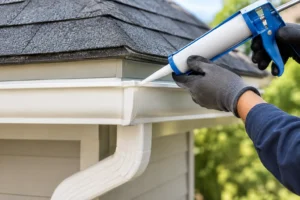
A drip from a gutter corner can look minor until a coastal downpour sends water down the fascia, across a porch, or into the soil beside your foundation. Knowing how to repair gutter corners helps homeowners address a common source of leaks before it contributes to wood rot, landscape washout, mildew, or costly exterior repairs.
Gutter corners carry a heavy workload. They redirect roof runoff around the home while dealing with standing water, leaves, pine needles, roof grit, and wind-driven debris. In Myrtle Beach, the Grand Strand, and surrounding North and South Carolina communities, intense rain and humid, salty air can expose weak seams quickly. The right repair depends on whether the corner simply has a failed seal or whether the gutter system has begun to pull apart, sag, corrode, or drain incorrectly.
Why Gutter Corners Start Leaking
Most residential gutters use inside corners and outside corners to connect straight gutter runs. The connection may be a pre-formed corner fitting secured with fasteners, or a mitered joint where two pieces of gutter meet. Either way, the seam is sealed to keep water inside the channel.
Over time, expansion and contraction can break that seal. Aluminum moves as temperatures change, and a corner that holds water because of poor slope experiences additional stress. Clogs also matter. When leaves or pine needles build up near a corner, water remains against the seam rather than moving to the downspout. That prolonged exposure can cause even a small opening to become a steady leak.
A loose hanger, separated joint, or bent gutter can be the deeper issue. If the gutter run is pulling away from the fascia, adding sealant alone may stop a drip temporarily but will not restore the support or pitch needed for dependable drainage. Coastal homes may also face corrosion at fasteners and seams, particularly where moisture remains trapped beneath old sealant.
Inspect the Corner Before Choosing a Repair
Wait for dry weather and inspect the corner from the ground first. Water stains on fascia boards, peeling paint, streaks on siding, or bare soil below the corner often point to an active or recurring leak. Look for a visible gap in the seam, cracked sealant, rusted screws, or a corner that sits lower than the surrounding gutter.
If you can safely access the gutter from a stable ladder, remove debris and check the inside of the corner. A clean gutter makes the problem easier to identify. Dirt and granules can hide a split seam, while wet debris can make it appear that the entire gutter is leaking.
Do not lean a ladder against a gutter or use the gutter as a handhold. Thin aluminum can bend under body weight, creating a larger drainage problem. Two-story roofs, uneven ground, soft soil, and steep rooflines are good reasons to schedule a professional inspection rather than attempt the repair from a ladder.
Test Where the Water Escapes
A garden hose provides a simple test after the corner is clean. Start with a gentle flow upstream of the corner and watch the seam from below. This is more useful than blasting water directly into the fitting, which can force water through a sound joint.
If water escapes from the seam, the seal or joint is likely the problem. If it spills over the front edge, the cause may be a clog, an undersized downspout, a poor gutter pitch, or an obstruction farther along the run. If water runs behind the gutter, inspect the fascia and drip edge as well. A corner repair cannot solve water that is bypassing the gutter system entirely.
How to Repair Gutter Corners With Failed Sealant
For a corner that is still firmly attached and properly aligned, resealing is often an effective repair. Use a gutter-specific exterior sealant designed for metal gutters. Avoid relying on household caulk, roof cement, or an incompatible silicone product. These materials may not adhere well to aged aluminum, may crack as the metal moves, or can make future repairs more difficult.
Begin by removing loose, cracked, or peeling old sealant from inside the gutter corner. A putty knife or scraper can help, but work carefully so you do not enlarge the joint or puncture thin metal. Clean the area thoroughly, then let it dry completely. Sealant applied over damp debris, algae, or old loose material will not form a lasting bond.
Apply a continuous bead of gutter sealant along the inside seam, pressing it into the joint rather than laying it only on the surface. Smooth it according to the product directions and allow the recommended cure time before testing with water. The goal is a sealed interior seam that channels runoff past the connection.
A small bead on the exterior can sometimes provide extra protection, but the primary seal belongs inside the gutter, where water pressure occurs. Applying excessive sealant outside the fitting can trap dirt and moisture, leaving the actual cause of the leak unresolved.
When the Corner Needs More Than Sealant
Sealant will not correct structural movement. If the corner has a noticeable gap, loose fasteners, bent metal, or a gutter run that has pulled away from the fascia, the joint must be realigned and secured before it is sealed. Depending on the construction, this can involve replacing corroded screws, installing proper hangers, or replacing the corner fitting itself.
A damaged fitting should generally be replaced instead of patched repeatedly. This is especially true when the metal is cracked, deeply corroded, or distorted by a fallen branch. Repeated layers of sealant can mask the damage for a season, but heavy rain will eventually test the weak point again.
Pitch is another deciding factor. Gutters should slope gently toward their downspouts so water does not stand in the corner. A corner that continually holds water may show that hangers have loosened or the original slope was not set correctly. Correcting the pitch protects the repaired seam and reduces the chance of mosquitoes, debris buildup, and corrosion.
Protect Fascia and Roof Edges During the Repair
A leaking corner often affects more than the gutter itself. Water can wick into fascia boards, soffits, roof decking, and trim behind the gutter. Press gently on exposed fascia near the leak if it is safely reachable. Soft wood, dark staining, or flaking paint may indicate moisture damage that needs attention before new hardware is installed.
Check whether the gutter sits correctly beneath the roof’s drip edge. The drip edge should guide water into the gutter, not behind it. On older homes and some replacement-roof installations, this detail can be wrong or incomplete. Repairing the corner without addressing roof-edge runoff can leave homeowners with the same symptoms after the next storm.
For vacation homes and second properties, routine inspections are particularly valuable. A corner leak may go unnoticed for weeks, allowing repeated rain to damage trim or saturate soil near the home. A professional inspection can identify the active leak as well as the conditions causing it.
Gutter Guards Can Reduce Repeat Corner Problems
A repaired corner lasts longer when the gutter can move water freely. Open gutters in the Carolinas commonly collect pine needles, oak leaves, seed pods, insects, and roof grit. Debris tends to settle at corners and near downspouts, where it holds moisture against seams and creates overflow during sudden tropical rain.
Professionally installed stainless-steel micro-mesh gutter protection keeps fine debris out while allowing water to enter the gutter. It does not eliminate the need to inspect the system after severe weather, and it cannot correct a damaged or poorly pitched gutter. However, after necessary repairs are completed, quality protection can significantly reduce the clogs and standing water that contribute to recurring corner leaks.
If guards are already installed, do not assume the gutter beneath them is free of debris. A specialist can inspect the complete drainage system, including the corner seams, gutter slope, downspouts, and guard attachment, then recommend whether the existing protection should be adjusted, removed for repair, or replaced.
When to Call a Gutter Repair Specialist
Homeowners can often reseal a clean, accessible, stable corner. Professional service is the better choice when there is fascia damage, loose gutters, persistent overflow, multiple leaking seams, corrosion, difficult ladder access, or evidence that water is getting behind the gutter.
Clearwater Rain Gutters has served homeowners since 2006 with inspections that look beyond the visible drip. A proper evaluation considers roof design, drainage patterns, debris exposure, and the condition of the entire gutter run. That matters in communities from North Myrtle Beach and Conway to Murrells Inlet, Pawleys Island, and Georgetown, where heavy rain can turn a small weak seam into a larger property-protection concern.
Before the next hard rain, give any suspect gutter corner a close look from the ground. Addressing a small leak while the gutter is still sound is one of the simplest ways to keep roof runoff where it belongs: safely away from your home.
Leave a Reply
You must be logged in to post a comment.