
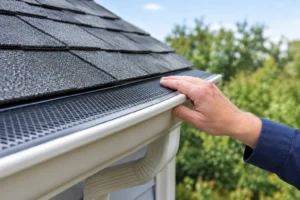
A gutter guard warranty should give a homeowner more than a reassuring line on a proposal. It should clarify what happens if debris stops water from entering the gutter, who stands behind the product, and whether the installation itself was completed to standards that support long-term performance. Along the Grand Strand, those details matter. Tropical downpours, pine needles, roof grit, salt-air exposure, and wind-driven debris can quickly expose weaknesses in a gutter system.
For a home in Myrtle Beach, Murrells Inlet, Pawleys Island, Conway, or North Myrtle Beach, dependable gutter protection is part of protecting the roofline, foundation, landscaping, and crawl space. A strong warranty is one sign that the materials and installation are designed for that responsibility. Still, not every warranty covers the same thing, and the fine print deserves a careful look before work begins.
What Does a Gutter Guard Warranty Actually Protect?
Most homeowners hear the word “warranty” and assume it covers every gutter-related problem. In practice, coverage usually falls into separate categories: the guard material, clog performance, and installation workmanship. Knowing the difference helps set realistic expectations and makes it easier to compare proposals.
A manufacturer warranty generally addresses defects in the gutter guard product itself. For example, it may cover premature material failure under normal conditions. A no-clog warranty is more specific. It addresses the guard’s ability to keep debris out of the gutter channel so water can flow through the system as intended. Workmanship coverage, when offered, applies to the contractor’s installation rather than the manufacturer’s product.
These distinctions are not technicalities. A guard can be made from excellent material but installed at the wrong angle, attached improperly, or paired with damaged gutters. Conversely, a correctly installed guard cannot repair a gutter that is undersized, pulling away from the fascia, or pitched in the wrong direction. The best protection starts with an inspection of the entire drainage system, not simply a decision to cover the gutter opening.
Why No-Clog Coverage Matters in Coastal Carolina
In a mild climate with only a few deciduous trees, a basic screen may appear adequate for a while. Coastal Carolina homes face a more demanding mix of conditions. Long pine needles can bridge over wide openings. Fine shingle grit can settle in ordinary screens. Wind can carry seed pods, insects, and small debris onto roof valleys, while heavy rain tests whether the guard can accept water fast enough.
Stainless-steel micro-mesh is designed to handle that smaller debris while allowing water to pass through. GutterGlove systems use a fine stainless-steel mesh and anti-microbial technology to help prevent organic buildup on the surface. That construction is especially useful around pine trees and in humid areas where trapped material can stay wet.
A 40-year manufacturer-backed no-clog warranty reflects confidence in this type of system, but it should not be treated as a substitute for proper installation. Water has to reach the guard, pass through it, enter a properly pitched gutter, and move through clear downspouts away from the home. Every part of that path matters during a fast-moving coastal storm.
Read the Warranty Before You Need It
A quality contractor should be comfortable explaining the warranty in plain language before you sign. Ask for the actual terms, not only a verbal description. The written document controls the coverage, claim process, exclusions, and any homeowner responsibilities.
Pay particular attention to whether the warranty is issued by the manufacturer, the installer, or both. Manufacturer-backed coverage can provide lasting reassurance because it is tied to the product maker rather than only to a local service agreement. However, the installer still matters. Installation quality determines whether the system is correctly secured, integrated with the roof edge, and configured for your home’s water volume and debris exposure.
Also ask whether the warranty is transferable if you sell the property. This can matter for second homes, rental properties, and homeowners who may eventually put their coastal property on the market. Transferability rules vary, and some warranties require registration or notification within a set period. It is better to understand those requirements while the paperwork is easy to locate.
Questions Worth Asking During an Estimate
During a gutter protection inspection, ask whether the existing gutters are in sound condition and whether repairs are needed before guards are installed. Ask how the product performs with pine needles, roof valleys, steep slopes, and the heaviest rain conditions common to your property. Then ask what the warranty does not cover.
Exclusions often involve damage from extraordinary events, neglected structural problems, alterations made after installation, or issues unrelated to the guard itself. A warranty may not cover a gutter crushed by a falling limb, fascia damaged by rot, or overflow caused by a buried or blocked downspout. Those are different problems requiring different repairs.
Clear answers are a good sign. A contractor who promises that any guard will eliminate every possible maintenance task, under every weather condition, is oversimplifying the situation. Even premium guards may need an occasional visual check after severe weather, particularly around roof valleys and downspout outlets. The goal is substantial maintenance reduction and reliable drainage, not a claim that a home will never need exterior care again.
Installation Can Protect or Undermine the Warranty
A gutter guard performs best when it is part of a well-designed system. Before installation, a specialist should look for loose hangers, leaking end caps and corners, sagging sections, improper slope, deteriorated fascia, and downspout discharge too close to the foundation. Addressing those issues first prevents a new guard from being placed over an existing drainage failure.
Proper fitting is equally important. Guards should be securely attached and shaped to direct water into the gutter without creating gaps where debris can enter. Roof edge details, gutter style, shingle condition, and the amount of water shed by each roof plane all affect the installation approach. A one-size-fits-all method may be faster, but it is not the same as a customized installation.
Clearwater Rain Gutters evaluates these conditions before recommending professionally installed GutterGlove protection. That inspection-first approach is particularly valuable for older homes, vacation properties that sit empty for stretches of time, and homes beneath heavy tree cover. It also creates a documented starting point for the system, which can be helpful if a warranty concern ever arises.
Keep Your Warranty Documentation Accessible
After installation, save the contract, paid invoice, warranty paperwork, product information, and any registration confirmation in a place you can find later. Take a few photos of the completed gutter line and downspout outlets as well. These records are useful for warranty questions, future service, and property-sale documentation.
It is also wise to inspect the exterior from the ground after major storms. Watch for water spilling over the front of the gutter, water running behind the gutter, loose sections, or downspouts that discharge near the foundation. Do not climb a ladder to investigate if you are not equipped to do so safely. Call a professional if you notice persistent overflow or signs of drainage damage.
Remember that a no-clog warranty addresses a specific performance concern. It does not replace roof maintenance, tree care, or repairs caused by storm damage. What it can do is remove one of the most common reasons gutters fail: debris collecting inside the channel until water has nowhere to go.
A Warranty Is Strongest When the System Is Sound
The value of gutter protection is measured during the rainstorm, not on installation day. When water is directed away from the roof edge and foundation instead of spilling into beds, soaking crawl spaces, or staining siding, the home is better positioned against expensive moisture damage.
Before choosing a system, request a free inspection and ask to see exactly how the proposed guard, gutter condition, and warranty work together. A well-explained 40-year no-clog warranty can provide meaningful peace of mind, but the lasting benefit comes from pairing it with the right product, careful installation, and a drainage system built to handle your home’s weather.
Leave a Reply
You must be logged in to post a comment.