
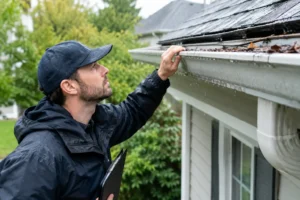
A hard coastal downpour can reveal more about a gutter system in 20 minutes than a dry-day walk around the house ever will. A gutter inspection after heavy rain helps homeowners spot where water is escaping, backing up, or reaching areas it was never meant to touch. For homes along the Grand Strand and throughout North and South Carolina, that matters. Tropical rainfall, humidity, pine needles, roof grit, and wind-driven debris can turn a minor drainage issue into roof, siding, foundation, or landscape damage.
The safest time to observe a gutter system is from the ground while the rain is falling or shortly after it stops. There is no reason to climb a wet ladder or walk on a wet roof. Instead, look for visible water patterns, then schedule a professional inspection if anything appears out of place.
Why Heavy Rain Is the Real Test for Gutters
Gutters do not have to look full of leaves to fail. A gutter can appear reasonably clear from the ground while debris, shingle granules, standing water, loose fasteners, or an improperly pitched section prevents proper drainage. During light rain, that problem may go unnoticed. During a strong storm, it becomes obvious.
A working system should collect roof runoff, carry it through the gutter channel, direct it into downspouts, and discharge water away from the home’s foundation. When any part of that path is restricted or damaged, water takes the easier route: over the front edge, behind the gutter, down an exterior wall, or straight into a planting bed near the house.
For second-home and vacation-property owners, post-storm checks are especially valuable. An overflow that goes unnoticed for several storms can saturate fascia boards, stain siding, wash away mulch, and create moisture conditions that encourage mold, mildew, and wood rot.
7 Warning Signs to Look For After a Storm
A quick ground-level walk around the home can tell you whether your gutters need a closer look. Pay attention to these signs after rainfall, particularly after a tropical downpour or a storm with strong winds.
- Water pours over the gutter edge. Overflow usually points to a clog, but it can also mean the gutter is undersized, improperly pitched, or receiving more runoff than its current layout can handle. Roof valleys are common trouble spots because they send concentrated sheets of water into a small gutter area.
- Water runs behind the gutter. If water appears between the gutter and fascia board, the issue may be a loose gutter, failed fasteners, a missing drip edge, or debris blocking the channel. This is a concern because hidden water behind gutters can damage the wood supporting them.
- Downspouts drain slowly or not at all. A downspout should release water promptly after the rain begins. Weak flow may mean a blockage in the elbow, outlet, or underground extension. If water pools at the top of a downspout, the obstruction needs attention before the next storm.
- Puddles form near the foundation. Gutters are only part of the drainage system. Downspouts must also move water far enough away from the house. Persistent pooling near a crawl space, slab, or basement wall can contribute to soil erosion, moisture intrusion, and settlement concerns over time.
- The gutter line sags or pulls away. Water is heavy. A clogged gutter holding standing water can strain hangers and fasteners until sections begin to bow. Sagging also changes the gutter’s pitch, which allows even more water and debris to remain in the channel.
- Streaks, stains, or peeling paint appear on siding. These clues often indicate repeated overflow or leaks at a gutter seam, corner, or end cap. The damage may seem cosmetic at first, but recurring moisture can eventually affect trim, soffits, and exterior wall materials.
- Mulch, soil, or gravel has washed out below the roofline. Water leaving a gutter at the wrong place or with too much force can carve channels through beds and around walkways. In coastal landscapes, heavy rain can move sand and soil quickly, exposing roots and changing drainage grades.
One isolated drip is not always an emergency. A small amount of water can trail from a gutter during a severe storm, especially where roof valleys concentrate runoff. Repeated overflow, standing water, visible separation, or water near the foundation deserves professional attention.
What a Professional Gutter Inspection After Heavy Rain Should Cover
A thorough inspection is more than checking for leaves. A specialist should assess how the entire system handles water, including the roof edge, gutter sections, corners, end caps, outlets, downspouts, fasteners, and discharge points.
First, the inspector looks for obstructions and buildup. Pine needles can form dense mats that block outlets, while roof grit settles in low areas and restricts flow. Nests, insects, and small debris can also collect inside open gutters and downspouts. In humid Carolina conditions, wet organic material stays damp longer and can accelerate staining and deterioration.
Next comes the condition of the gutter itself. Seams, corners, and end caps are common leak locations. The inspection should identify cracked sealant, separated connections, loose hangers, damaged downspout straps, and sections that no longer maintain the correct slope toward the outlet.
Drainage around the home also matters. A gutter system can be clean and still create problems if downspouts end too close to the foundation or discharge onto a hard surface that directs water back toward the house. The goal is controlled water movement away from vulnerable areas, not simply getting water out of the gutter.
Finally, a professional can evaluate whether the system is suited to the home. Roof size, pitch, valleys, tree cover, and exposure to wind-driven rain all affect the right gutter and protection configuration. A home beneath tall pines in Conway has different debris pressure than a more exposed coastal property in Myrtle Beach, Murrells Inlet, or Pawleys Island.
When Cleaning Is Enough and When Protection Makes Sense
If the gutter is structurally sound and the issue is limited to a small, accessible accumulation, cleaning and a minor repair may restore performance. That is often the practical choice for a system with light debris exposure and no recurring overflow.
But repeated cleanings do not correct a system that constantly collects pine needles, leaves, roof granules, and windblown debris. They also require homeowners to keep returning to a ladder, often after storms when surfaces are wet and conditions are less safe. If clogs return season after season, gutter protection may be the more durable solution.
Professionally installed stainless-steel micro-mesh gutter protection keeps fine debris out of the gutter while allowing rainwater to enter. Premium systems such as GutterGlove are designed to handle small debris that can defeat wider-opening screens, including pine needles and roof grit. The mesh is paired with a raised design that encourages debris to shed away rather than settle into the channel.
No gutter product should be presented as a cure for unrelated drainage problems. Loose gutters, damaged fascia, undersized downspouts, and poor discharge locations still need to be addressed. The strongest result comes from correcting existing repairs first, then installing a protection system that fits the roofline and debris conditions.
A Safer Post-Storm Routine for Homeowners
After a heavy rain, walk the perimeter of the home once conditions are safe. Watch where water is leaving the roofline, listen for downspouts that are backing up, and check for fresh washout near beds, walkways, and the foundation. If you see overflow, take a few photos from the ground. They can help a gutter specialist identify patterns that may not be visible once everything dries.
Avoid clearing a clog from a ladder during or immediately after a storm. Wet roofs, saturated soil, and slick aluminum gutters create unnecessary risk. A professional has the equipment to inspect the system safely and determine whether cleaning, repair, or improved gutter protection is the right response.
For homeowners who want fewer surprises after the next storm, Clearwater Rain Gutters can provide a detailed inspection and a customized recommendation for repair, cleaning, or professionally installed GutterGlove protection. A timely check after heavy rain can keep a small drainage warning from becoming a costly repair around the roofline or foundation.
Leave a Reply
You must be logged in to post a comment.