
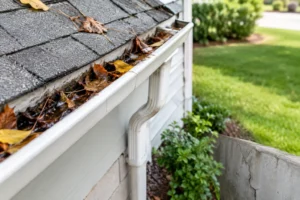
A gutter clog may begin with pine needles, oak leaves, roof grit, or a windblown nest. During a coastal Carolina downpour, though, that small blockage can turn a working drainage system into a spillway aimed directly at your home. Understanding how clogged gutters damage foundations helps homeowners address a problem that is easy to miss until water has already begun moving soil, wetting crawl spaces, or staining masonry.
For homes across Myrtle Beach, the Grand Strand, Conway, Georgetown, and surrounding North and South Carolina communities, the risk is not limited to autumn leaves. Humidity, frequent storms, salt air, pine debris, and wind-driven material can keep gutters under constant pressure. The objective is simple: collect roof runoff, carry it through clear downspouts, and release it far enough from the house that the ground can absorb it safely.
How Clogged Gutters Damage Foundations
A gutter system protects the foundation by controlling where a large volume of roof water lands. When gutters are clear, water moves to downspouts and exits at planned locations. When debris blocks that path, water backs up and spills over the gutter edge, often in the same concentrated spots during every storm.
That repeated overflow saturates the soil immediately beside the foundation. Soil can only absorb so much water at once. Once it is saturated, additional runoff pools at the wall, follows cracks and gaps, or flows underneath the home toward a crawl space.
The problem becomes more serious over time because water changes the soil that supports the structure. Fine particles can wash away, creating erosion and low areas near the foundation. In other cases, clay-heavy soil expands when wet and contracts as it dries. That cycle can place uneven pressure on foundation walls and slabs.
Not every overflow event causes structural damage. A brief blockage during a light rain may leave no lasting effect, especially if the grading and downspout discharge are excellent. The concern is repeated exposure: heavy runoff landing in one place, poor drainage around the home, and a clog that remains through multiple storms.
Overflow creates a concentrated waterfall
A typical roof sheds far more water than many homeowners expect. Even a moderate rain sends runoff from hundreds or thousands of square feet of roofing toward the gutter line. If a downspout is blocked or the gutter is packed with debris, that water has nowhere to go except over the side.
Water cascading over an eave can dig channels into mulch and soil, wash out planting beds, and leave a trench along the foundation. You may first notice splashing, bare soil, or a persistent puddle. Those visible signs are useful warnings that the drainage path is failing.
Saturated soil increases moisture pressure
Foundation walls are designed to support a home, not to act as a permanent barrier against standing water. When soil beside the foundation stays wet, moisture pressure increases against below-grade walls. Small cracks, utility penetrations, and imperfect seals become easier paths for water.
For homes with crawl spaces, the effects may show up as damp insulation, musty odors, mildew, or condensation on ductwork. Coastal humidity already makes moisture management challenging. Adding roof runoff at the foundation line can make crawl-space conditions much harder to control.
Erosion removes the support water should never touch
Overflow does not always leave a dramatic hole. It can gradually carry away small amounts of soil after each storm. Over months or years, the ground may slope toward the house instead of away from it, exposing portions of the foundation or creating depressions where water collects.
This is why landscape washout is more than a cosmetic problem. Proper grading is part of the home’s water-management system. When gutter overflow reshapes the ground, the home becomes more vulnerable to the next storm.
Why Coastal Carolina Homes Need Reliable Drainage
Homes near the coast face a combination of intense rainfall and persistent debris. Tropical systems can drop large volumes of water in a short period, while everyday thunderstorms test whether gutters and downspouts can keep up. Pine needles are especially troublesome because they can knit together inside a gutter or lodge in downspout openings.
Second homes and vacation properties face an additional challenge: a blockage can develop when no one is there to see the first signs of overflow. By the time an owner returns, landscaping may be washed out, fascia may be stained, and moisture may have accumulated beneath the house.
Roof design also matters. Long roof valleys, steep pitches, and upper roof sections can direct a heavy surge of water to one short stretch of gutter. A guard or gutter configuration that works well on a low-debris roof may need a different approach on a home surrounded by pines or shaded by mature trees. A professional inspection should consider roof runoff patterns, gutter condition, downspout capacity, and where water discharges after it leaves the system.
Early Signs Your Gutters Are Putting the Foundation at Risk
You do not need to wait for a foundation repair bill to investigate drainage. Look for patterns after or during rainfall, rather than judging gutters only on a dry day. Four signs deserve prompt attention:
- Water spilling over the front or back edge of the gutter instead of entering a downspout.
- Mud splashing onto siding, foundation walls, or porch supports.
- Mulch, gravel, or soil repeatedly washing away below an eave.
- Puddles, soft ground, or a musty crawl-space odor near the home after rain.
Also look for gutters that pull away from the fascia, sag under debris weight, or leak at corners and end caps. A clog can contribute to each of these conditions. Once water begins escaping through a failed joint or loose section, it may be deposited even closer to the foundation than an obvious overflow.
Fix the Whole Water Path, Not Just the Visible Clog
Cleaning debris from a gutter is often necessary, but it is not always the complete solution. The system should be evaluated from the roof edge to the discharge point. Gutters need the correct pitch, secure fastening, sealed corners and end caps, clear downspouts, and extensions or drainage routes that carry water away from the foundation.
A homeowner can sometimes clear a small, accessible obstruction. The trade-off is safety and completeness. Ladder work is risky, and removing leaves from the trough does not necessarily reveal a blocked downspout, damaged hanger, leaking seam, or improper slope. For homes with two stories, steep roofs, or persistent overflow, professional service is usually the safer choice.
Gutter guards can reduce the source of recurring clogs, but performance depends on material, installation, roof design, and debris type. A professionally installed stainless-steel micro-mesh system, such as GutterGlove, is designed to keep out leaves, pine needles, insects, roof grit, and other small debris while allowing rainwater to enter the gutter. It should be paired with a sound, properly repaired gutter system rather than installed over existing drainage defects.
Clearwater Rain Gutters approaches gutter protection as part of exterior water management, not as a one-size-fits-all add-on. An inspection can identify whether the immediate need is cleaning, a downspout correction, gutter repair, or a durable micro-mesh protection system with a 40-year manufacturer-backed no-clog warranty.
Protect the Ground Around Your Home Before the Next Storm
The best time to correct a drainage problem is when it is still showing up as a puddle, a washed-out bed, or an occasional overflow. Once chronic moisture reaches a crawl space or soil support begins to change, the repair can involve far more than gutters.
If you have noticed runoff collecting near your foundation, schedule a professional inspection and ask for a clear assessment of the full water path. Keeping roof water moving where it belongs is one of the most practical ways to protect your home, your landscaping, and the ground that supports both.
Leave a Reply
You must be logged in to post a comment.