
A single coastal downpour can show exactly where a gutter system is falling short. Water spills over the edge, cuts channels through mulch, stains siding, and collects near the foundation. For homeowners along the Grand Strand and throughout North and South Carolina, gutter guard cost is not simply a question of buying a screen. It is the cost of reducing clogs, limiting ladder work, and helping the entire drainage system do its job when heavy rain arrives.
The right price depends on the home, the existing gutters, the debris around the roofline, and the level of protection required. A low-cost guard that lets pine needles, roof grit, and small organic debris into the gutter may look economical at first. It can also leave the homeowner paying for recurring cleaning, repairs, or water-damage corrections later.
What Affects Gutter Guard Cost?
Professional gutter guard pricing is typically based on linear feet, but the final estimate should reflect much more than the length of the gutter run. A straightforward single-story home with sound, accessible gutters generally requires less labor than a multistory home with steep rooflines, long valleys, or damaged components.
Installed gutter guards often range broadly in price, commonly from about $10 to $40 or more per linear foot. The lower end may involve basic materials or simple installations. Premium stainless-steel micro-mesh systems, especially when paired with gutter repairs and careful fitting, fall toward the higher end. A free on-site inspection is the most reliable way to turn that broad range into a meaningful number for a specific home.
The type of gutter guard material
Material has a direct effect on durability and performance. Brush-style inserts and lightweight plastic screens may be inexpensive, but they can trap debris on top, break down in harsh sun, or allow fine material through the openings. They often need frequent attention in neighborhoods with pine trees or heavy leaf cover.
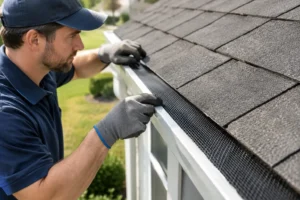
Stainless-steel micro-mesh costs more because it is designed to filter out much smaller debris while allowing water into the gutter. A professionally installed GutterGlove system uses fine stainless-steel mesh to block leaves, pine needles, roof grit, insects, and nesting debris. Its anti-microbial technology also helps limit the buildup that can occur in humid coastal conditions.
The product is only part of the value. Guards must be sized, secured, and positioned correctly for the roof and gutter system. Poorly fitted mesh or screens can interfere with water flow, lift in high winds, or create places where debris catches.
Gutter condition before installation
Gutter guards cannot correct a failing drainage system on their own. If gutters are pulling away from the fascia, holding standing water, leaking at corners, or improperly pitched, those issues should be addressed before guards are installed.
A thorough estimate may include cleaning existing debris, resealing end caps and corners, replacing damaged hangers, repairing sections of gutter, or correcting drainage concerns. Those services add to the initial project total, but they prevent the new guard system from being installed over problems that will continue to cause trouble.
This is particularly relevant for homes near Myrtle Beach, Murrells Inlet, Pawleys Island, and other coastal communities. Salt air, humidity, wind-driven rain, and storm debris can expose weak gutter connections quickly. An estimate that accounts for needed repairs is more transparent than one that prices guards alone and leaves drainage problems behind.
Roof design, access, and debris exposure
Roof complexity affects installation time. Multiple levels, sharp pitches, dormers, valleys, skylights, and limited access all require additional planning and safety measures. Taller homes may also require more specialized equipment and labor.
The trees around the home matter just as much. A property shaded by pines faces a different challenge than an open lot with mostly large leaves. Pine needles can slip through wide screens. Oak tassels, seed pods, shingle granules, and windblown sand can also collect in an unprotected gutter. The guard design should match the debris profile rather than rely on a one-size-fits-all approach.
Why the Cheapest Gutter Guard Cost Can Be Misleading
A homeowner may reasonably compare quotes and ask why one price is lower than another. The answer often comes down to material quality, preparation work, installation standards, and warranty coverage.
A low upfront price can mean thinner material, larger openings, limited fastening, or no inspection of the underlying gutter system. It may also exclude gutter cleaning or minor repairs that are necessary for proper performance. Those omissions can turn into added costs when the system clogs, sags, or overflows during the next strong storm.
Premium gutter protection is intended to lower the long-term burden of ownership. It does not make a home maintenance-free, and no responsible contractor should promise that a roofline will never need inspection. However, a well-designed micro-mesh system can greatly reduce the routine accumulation that forces homeowners onto ladders or into repeated cleaning appointments.
For second-home and vacation-property owners, that reduction can be especially valuable. A clogged gutter may go unnoticed for weeks, allowing water to overflow against fascia boards, siding, walkways, and landscaping. Reducing that risk helps protect a property even when no one is there to see the first signs of trouble.
Compare Long-Term Costs, Not Just the Initial Quote
The practical way to evaluate gutter guard cost is to compare it with the expenses and risks it is meant to reduce. Regular gutter cleaning has a recurring cost, and homes with heavy tree coverage may need service more than once per year. There is also the personal risk of climbing a ladder, particularly for retirees or homeowners who do not want to manage roofline maintenance themselves.
Clogged gutters can lead to more expensive consequences. Overflowing water can contribute to fascia and soffit deterioration, wood rot, mold and mildew, foundation erosion, crawl-space moisture, and landscape washout. Not every clog causes major damage, but repeated overflow places parts of the home under unnecessary stress.
A premium guard system makes the most financial sense when it is installed on gutters that are repaired, correctly pitched, and securely attached. That combination directs water away from the structure rather than simply covering a system that already needs help.
Warranty and workmanship matter
Warranty coverage should be part of any cost comparison. Homeowners should ask what the manufacturer covers, whether the warranty is transferable, and how the installer stands behind the work. A long manufacturer-backed warranty is meaningful when it is paired with a contractor that will inspect the home carefully and install the system according to product requirements.
Clearwater Rain Gutters has served local homeowners since 2006 and installs GutterGlove stainless-steel micro-mesh protection with a 40-year manufacturer-backed no-clog warranty. That level of coverage reflects the difference between a temporary screen solution and a system selected for demanding rainfall and debris conditions.
What to Expect From a Professional Estimate
A useful estimate should start at the roofline, not with a quick measurement from the driveway. The installer should look at gutter size and condition, downspout placement, roof pitch, visible drainage patterns, and the types of debris surrounding the home. They should also identify weak corners, loose hangers, leaks, or sections where water may be overshooting the gutter.
The estimate should clearly separate guard installation from any recommended repairs or cleaning. That gives homeowners a clear picture of what is included and why. It also makes it easier to compare proposals fairly, since a lower quote may not include the preparation work required for reliable performance.
Ask whether the proposed guard handles fine debris, how it is secured, what maintenance is still recommended, and what warranty applies. These questions move the conversation beyond price per foot and toward the actual protection the home will receive.
When rain is moving fast across a Carolina roof, the goal is simple: keep water flowing through the gutters and away from the home. A careful inspection and a properly fitted guard system give homeowners a practical way to protect that path before the next storm tests it.
Leave a Reply
You must be logged in to post a comment.