
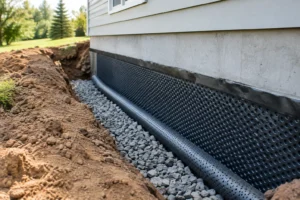
A heavy coastal rain can send hundreds of gallons of water off a roof in a short time. This foundation drainage protection guide explains where that water should go, why gutters are central to the answer, and how homeowners can reduce the risk of erosion, crawl-space moisture, and costly structural damage.
For homes across Myrtle Beach, the Grand Strand, Conway, Murrells Inlet, Pawleys Island, and Georgetown, drainage is not a minor maintenance detail. Tropical downpours, high humidity, pine needles, roof grit, and wind-driven debris can turn a small gutter blockage into water spilling directly beside the home. The goal is simple: collect roof runoff, move it through clear gutters and downspouts, and discharge it far enough away that it cannot saturate the soil along the foundation.
Why Roof Runoff Threatens a Foundation
Soil next to a foundation is not meant to receive a steady waterfall. When gutters overflow, water hits the same narrow strip of ground repeatedly. It can wash away mulch and topsoil, create channels in the landscape, and leave low spots where water pools against the house.
Over time, excess moisture can contribute to a damp crawl space, mildew odors, wood rot, insect activity, and mold concerns. Water pressure against foundation walls can also become a problem where drainage is poor. Not every wet area means there is a foundation defect, but persistent runoff makes existing weaknesses harder to manage.
Coastal properties face additional challenges. Sandy soil can drain quickly in some locations, yet it also erodes easily when roof water falls from height. Flat terrain may not provide enough natural slope to carry water away. In older homes, short downspouts, damaged gutters, or settled landscaping often allow runoff to return toward the house after every storm.
Foundation Drainage Protection Starts at the Roofline
The most effective drainage plan begins before water reaches the ground. A properly sized, securely mounted gutter system captures runoff at the roof edge and directs it to downspouts. If the gutter is clogged, pulling away from the fascia, improperly pitched, or missing an end cap, the rest of the drainage plan cannot perform as intended.
A gutter does not need to be visibly full of leaves to fail. Pine needles can form a mat across an outlet. Asphalt roof grit can settle in the bottom of a trough and restrict flow. Small twigs, seed pods, insects, and nesting material can block a downspout elbow. During a hard rain, that obstruction forces water over the front or back edge of the gutter.
Water overflowing behind the gutter is especially concerning because it can wet fascia boards and soffit areas before reaching the ground near the foundation. Water spilling over the front can carve trenches into beds below. Both situations deserve attention before recurring storms turn a manageable repair into a larger exterior maintenance project.
Keep gutters clear without relying on frequent ladder work
Regular cleaning helps, but it has limits. Homeowners with tall rooflines, second-story sections, or vacation properties may not be able to monitor gutters after every storm. Climbing ladders also creates a real safety risk, particularly when wet leaves and coastal humidity make surfaces slick.
Professionally installed gutter protection reduces the debris load that reaches the gutter interior. GutterGlove stainless-steel micro-mesh is designed to keep out leaves, pine needles, roof grit, insects, birds, and small debris while allowing rainwater to enter the system. Its fine mesh and anti-microbial technology help support steady water flow in debris-heavy environments.
No drainage system should be treated as completely maintenance-free. Roof valleys, downspout exits, and the exterior of the guard should still be inspected periodically. The practical difference is that a quality micro-mesh system can significantly reduce the repeated cleaning and clog-related overflow that place the foundation at risk.
Direct Water Far Enough From the House
Clear gutters only solve half the problem. Downspouts must discharge water away from the foundation rather than depositing it at the base of the wall. As a general rule, roof runoff should be directed several feet from the home, with the exact distance depending on the lot, grading, soil conditions, and local drainage layout.
A short splash block may help disperse light runoff, but it may not be enough for a large roof section or a steep roof plane. Downspout extensions, buried drain lines, or carefully planned swales can carry water to a suitable discharge area. The right solution depends on whether the property has room, adequate slope, and a safe location that will not send water toward a neighbor, driveway, or sidewalk.
Avoid routing water into an area that already stays wet. A drainage improvement that simply moves the problem from the foundation to a low landscape bed is not a complete fix. In many coastal yards, a contractor may need to look at the full path of water during and after rainfall, not just the nearest downspout.
Check the slope around the foundation
The ground should generally slope away from the home so surface water does not return to the foundation. Settling soil, decomposing mulch, and landscaping changes can gradually flatten that slope. A decorative border that looks level may actually be trapping water against siding or foundation walls.
Look for signs such as puddles that remain after rain, exposed roots, washed-out mulch, bare soil beneath a downspout, or water marks on the foundation. Inside the home, musty crawl-space odors, damp insulation, and recurring moisture may point to a drainage issue that warrants professional evaluation.
Grading work can be highly effective, but it should be coordinated with gutter discharge. Adding soil without correcting an overflowing gutter treats the symptom while leaving the source in place. Likewise, installing a downspout extension without addressing a clogged gutter may not stop water from spilling over the roof edge.
Warning Signs Your Drainage System Needs Attention
Homeowners often notice drainage problems during storms, but the evidence can remain visible long after the rain stops. Watch for these conditions around the exterior:
- Gutters overflowing at one corner or above a downspout
- Water spilling behind the gutter or staining fascia boards
- Downspouts that drain slowly or back up during rainfall
- Eroded soil, displaced mulch, or trenches below roof edges
- Standing water near the foundation or in crawl-space access areas
- Mildew, peeling paint, or wood rot around soffits and exterior trim
A single overflow during an unusually severe storm may not mean the system has failed. Repeated overflow, however, is a clear signal to inspect the gutters, downspouts, and discharge path. The sooner the cause is identified, the more likely the repair remains straightforward.
When Professional Gutter Protection Makes Sense
Professional gutter protection is especially valuable for homes beneath pine trees, near wooded lots, or exposed to regular wind-blown debris. It is also a practical choice for second-home owners and retirees who want less frequent ladder work without accepting the risk of clogged gutters.
Installation quality matters as much as the guard material. Guards must be matched to the roof edge, secured correctly, and integrated without compromising gutter pitch or drainage. Existing issues such as loose hangers, leaking corners, damaged end caps, sagging sections, and undersized downspouts should be addressed as part of the assessment.
Clearwater Rain Gutters has served homeowners since 2006 with a consultative inspection process that evaluates roof runoff, debris exposure, gutter condition, and drainage concerns. A professionally installed GutterGlove system includes a 40-year manufacturer-backed no-clog warranty, giving homeowners a durable option for protecting both the gutter system and the areas below it.
Build a Plan Before the Next Hard Rain
The best time to correct drainage is when the ground is dry and the issue is easy to assess. Walk the property after a normal rainfall, note where water exits each downspout, and look for evidence that runoff is collecting near the house. If gutters overflow or the landscape shows erosion, schedule an inspection rather than waiting for the next tropical system.
A free estimate can clarify whether the home needs gutter repair, cleaning, improved downspout routing, premium micro-mesh protection, or a combination of these measures. A well-managed roof drainage system protects more than gutters. It helps preserve the soil, trim, crawl space, landscaping, and foundation that support the home for years to come.
Leave a Reply
You must be logged in to post a comment.