
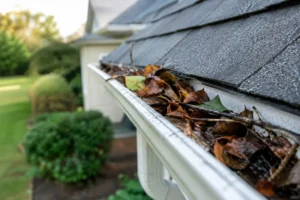
A gutter can look like a small part of a home until the next tropical downpour sends water spilling over its edge. The damage caused by clogged gutters is rarely limited to the gutter itself. When rainwater cannot move through the system and away from the house, it follows the easiest path – behind fascia boards, down siding, into planting beds, and alongside the foundation.
For homeowners across Myrtle Beach, the Grand Strand, and coastal North and South Carolina, that risk is amplified by heavy rain, wind-driven debris, pine needles, humidity, and seasonal storms. A clogged gutter may begin with leaves and roof grit, but it can lead to expensive repairs well beyond routine gutter maintenance.
How Damage Caused by Clogged Gutters Starts
A working gutter system does one job: it collects roof runoff and directs it through downspouts to a safe discharge area. Clogs interrupt that path. Leaves, seed pods, pine needles, shingle granules, nests, and small debris gather in the trough or at the downspout opening. Water backs up, eventually rising above the gutter’s front or rear edge.
Overflow is not always obvious from ground level. A homeowner may only notice dark stains on siding, mulch displaced from a flower bed, or a strip of soggy soil near the foundation. By then, water may have been taking the same damaging route through multiple storms.
The severity depends on the home. A small blockage on a low, simple roof may create a manageable maintenance issue. On a larger home with valleys, steep rooflines, nearby pine trees, or limited downspout capacity, the volume of water can overwhelm a clogged section quickly. Coastal storms also bring sudden, intense rainfall that exposes weak points in a drainage system.
Roof, Fascia, and Soffit Damage
When water pools inside a gutter, it adds substantial weight to the gutter and its fasteners. The gutter can sag, pull away from the fascia, or lose the proper slope needed for drainage. Once that slope is compromised, even a partial clog becomes more likely to hold water.
Overflowing water can also run behind the gutter, where it soaks the fascia board. Wood fascia may soften, rot, and no longer provide a secure mounting surface for gutters. In some cases, moisture reaches the soffit or roof decking, creating conditions that can contribute to staining, decay, and costly carpentry work.
Roof edges are especially vulnerable. Debris that remains wet against shingles can hold moisture in place, while backed-up water may find openings around the roofline. No gutter guard replaces a sound roof, but keeping water moving freely helps protect the roof components that gutters are designed to serve.
Heavy Gutters Can Fail Without Warning
A gutter full of wet leaves and standing water is much heavier than it appears. During a storm, the added load and wind can strain hangers, corners, end caps, and seams. A loose gutter is not simply unattractive. It changes where water lands and can send runoff directly against the home.
Professional inspection is useful here because a specialist can identify loose fasteners, failing seams, incorrect pitch, undersized downspouts, and damage that may be hidden above the roofline. Cleaning alone may remove the immediate blockage without correcting the condition that caused repeated overflow.
Foundation Erosion and Crawl-Space Moisture
Water should leave the roof and be discharged away from the foundation. When clogged gutters overflow, that concentrated runoff lands near the base of the home, often in the same place every time it rains.
Over time, it can erode soil, wash away mulch, and create low spots that hold water against the structure. In coastal Carolina’s sandy soils, erosion can happen quickly. The ground around a foundation may settle unevenly, and water can work its way into crawl spaces or basements where conditions allow.
Crawl-space moisture is a particular concern in humid areas such as Murrells Inlet, Pawleys Island, Georgetown, and Surfside Beach. Damp conditions can encourage mold and mildew, create musty odors, and contribute to wood deterioration beneath the home. While moisture problems can have more than one source, poor roof drainage is one of the first conditions worth checking.
Foundation repairs are rarely inexpensive, which is why prevention matters. A properly pitched, debris-free gutter system with effective downspouts helps keep roof runoff from becoming a foundation drainage problem.
Siding, Windows, and Exterior Finish Problems
Overflowing gutters create repeated sheets of water down the exterior walls. Vinyl siding can develop streaks and mildew. Painted wood trim may peel or deteriorate. Brick and masonry can show staining, while window trim and caulking may be exposed to moisture more often than intended.
Wind-driven rain makes this worse. During a coastal storm, water does not always fall straight down. If a gutter is blocked, runoff can be pushed behind the system and against vulnerable joints around windows, doors, and trim.
These issues do not always mean water has entered the home, but they are warning signs worth taking seriously. Fresh exterior staining, peeling paint near the roofline, or recurring mildew in one section of siding may point to an overflowing gutter above it.
Landscape Washout and Unsafe Walkways
Gutters protect more than the structure. They also help preserve the area around it. A waterfall from a blocked gutter can carve channels through mulch, flatten plants, expose roots, and send soil across sidewalks or driveways.
The practical consequences can be frustrating. Garden beds need to be rebuilt, drainage paths need correction, and wet walkways can become slippery. For vacation-property owners who are away during storms, landscape washout may go unnoticed until a visit weeks later.
Downspouts matter as much as the gutter itself. If a downspout is clogged, disconnected, or discharging too close to the home, the system cannot manage runoff as intended. An inspection should consider the entire drainage path, not only whether leaves are visible from the ground.
Why Regular Cleaning Has Limits
Gutter cleaning is necessary for unprotected systems, but it has limitations. In neighborhoods with mature trees, pine needles and roof grit can return soon after a cleaning. Homeowners may need to climb ladders multiple times each year, and cleaning does not prevent insects, birds, or small debris from entering again.
There is also a safety consideration. Wet ladders, uneven ground, and awkward rooflines make gutter cleaning a risky task, particularly for retirees, second-home owners, and anyone without proper equipment. Hiring cleaning help may reduce the physical risk, but it remains a recurring expense.
A maintenance plan can make sense for homes with light debris exposure and easy access. However, homes under pine trees or exposed to frequent storm debris often benefit from a more permanent approach to keeping the gutter channel clear.
Preventing Clogged-Gutter Damage With Professional Protection
High-quality gutter protection is designed to keep debris out while allowing rainwater into the gutter. The material and installation method matter. Wide openings can allow small debris to enter, while poorly fitted guards can lift, collect debris, or fail to handle heavy rainfall.
GutterGlove stainless-steel micro-mesh gutter protection uses fine mesh to block leaves, pine needles, roof grit, insects, birds, and other small debris. Its design allows water to pass through the mesh and into the gutter rather than relying on large holes that can become entry points for debris. Anti-microbial technology also helps support a cleaner surface in humid conditions.
Still, no solution should be selected based on a one-size-fits-all promise. Roof pitch, shingle type, gutter condition, nearby trees, valleys, and drainage layout all affect what the home needs. Existing gutters may require repair, resealing, re-pitching, or component replacement before guards are installed.
Clearwater Rain Gutters has served homeowners since 2006 with a consultative inspection process that evaluates these details before recommending a solution. Professionally installed GutterGlove protection is backed by a 40-year manufacturer warranty, helping homeowners reduce repeat cleaning and protect the parts of the property that overflowing water can damage.
Signs It Is Time to Schedule an Inspection
Do not wait for a gutter to detach from the house before addressing drainage concerns. Look for water spilling over the gutter line during rain, sagging sections, dark streaks beneath gutters, peeling fascia paint, loose downspouts, washed-out mulch, or persistent dampness near the foundation.
A free estimate and inspection can clarify whether the problem is a simple cleaning need, a repair issue, or evidence that the system needs lasting gutter protection. The best time to correct drainage is before the next hard rain turns a small clog into a repair project.
Your home should not have to absorb the consequences of every storm. Keeping rainwater moving safely away from the roofline, walls, and foundation is one of the most practical ways to protect the investment outside your front door.
Leave a Reply
You must be logged in to post a comment.